
Davenport IA Epoxy Flooring has installed flake epoxy floors for 20+ years in Davenport, IA, serving surrounding cities including Eldridge, Rock Island, Bettendorf, Moline and Milan. A flake floor is built by broadcasting colored vinyl chips into a wet epoxy base coat and sealing them under a clear topcoat. The result is a speckled, textured surface that resembles granite, hides everyday dirt and stands up to heavy use, which is why it is the most common floor we put in garages.
The chips are what you see, but the prep under them decides how long the floor lasts. Each slab is diamond ground to a stated surface profile, cracks and spalls are filled, and moisture is tested before pricing. The proposal names the flake blend, chip size, base color, coat count and finished thickness, so the finished floor can be checked against what you approved.
We install flake systems in garages, basements, workshops, laundry rooms, kennels and light commercial spaces. The sections below cover how flake floors are built, how blend and chip size change the look, and where the system works best.
How a Flake Epoxy Floor Is Built
Base Coat and Full Broadcast
After the slab is ground and primed, a pigmented 100% solids epoxy base coat is rolled on. While it is still wet, vinyl chips are thrown across the floor by hand until the surface is fully covered and no base color shows. This full broadcast locks thousands of chips into the resin and builds a thick, textured layer. The base coat color is chosen to match the blend, so any small gaps between chips blend into the look rather than standing out.
Scraping and Clear Topcoat
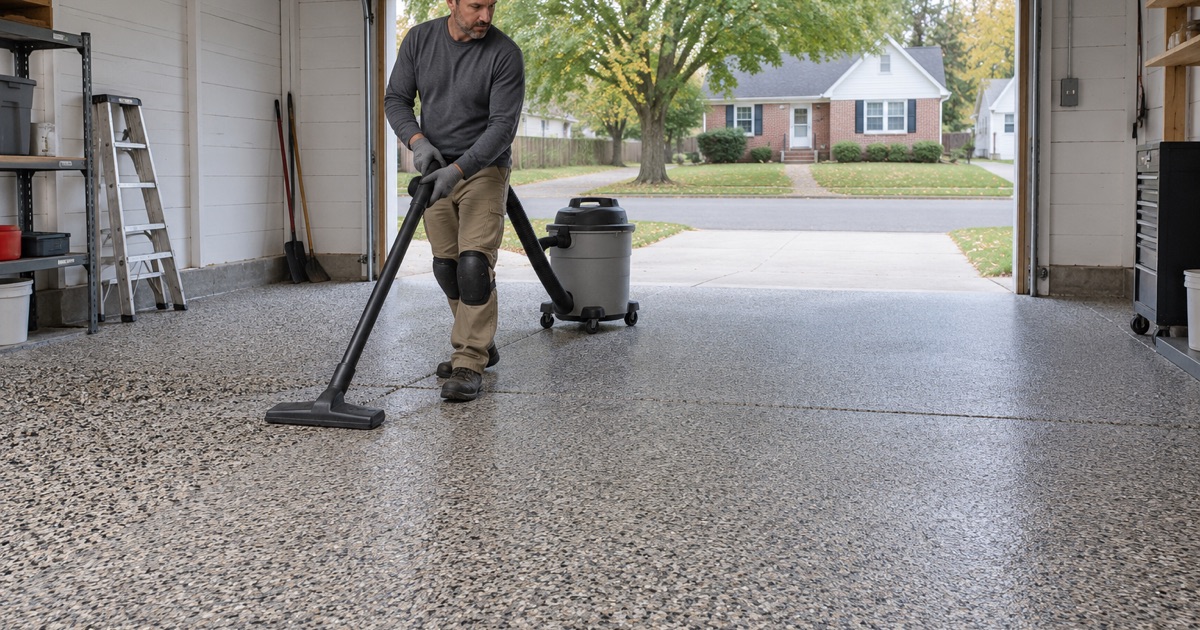
Once the base cures, the floor is scraped to knock down chips standing on end and vacuumed to remove loose ones. That step controls the final texture and keeps sharp edges out of the finish. One or more clear topcoats then seal the chips into a single surface.
We usually use a polyaspartic or polyurea topcoat because it resists UV yellowing, abrasion and road salt better than most epoxies. On garages with strong afternoon sun, that keeps the colors true.
Partial Broadcast Options
Some people prefer a lighter look, with chips scattered over a visible solid base. A partial broadcast uses fewer chips and shows more base color. It is less textured and slightly less forgiving of dust and wear, so we recommend it mainly for basements and rooms with lighter traffic.
Choosing Flake Blend and Chip Size
Chip Size and Pattern
Chip size has a large effect on the finished look. Small chips create a fine, almost terrazzo-like speckle, while larger chips give a bolder, more varied pattern. Larger chips tend to hide dust and scratches a bit better, and smaller chips read as cleaner and more uniform in a finished room. We show samples of each size in the blend you like so you can compare them side by side.
Color Blends for Real Use
Blends that mix grays, tans and blacks with a few accent colors hide dirt, salt residue and tire marks best. Very light blends look bright but show grime, and very dark blends show dust and white salt film. For a garage that sees a Quad Cities winter, a mid-tone blend is usually the most practical choice. In basements and shops, people often choose a lighter blend to brighten the room, since salt and tire marks are less of a concern there.
Matching Topcoat Sheen and Texture
The topcoat sheen changes how the flake reads. Gloss makes colors pop but shows scratches, while satin softens the look and hides wear. Adding a fine anti-slip aggregate to the topcoat improves grip on wet floors without hiding the flake.
Where Flake Floors Work Best
Garages and Salt-Season Traffic
In a garage, a full-broadcast flake floor hides the salt film and slush that come in on tires from November through March. Salt water stays on top of the sealed surface instead of soaking into the slab and causing freeze-thaw scaling. The texture also helps with footing when the floor is wet. That combination of durability, texture and forgiving looks is why flake is our standard recommendation for daily-use garages.
Basements, Laundry Rooms and Workshops
In basements, a flake floor gives a warm, finished look and hides lint and dust between cleanings. Laundry rooms and workshops benefit from the chemical resistance and easy cleanup. On older basement floors, paint, patches and glue are ground off first, and the moisture test decides the primer.
Kennels, Locker Rooms and Light Commercial Spaces
Kennels, grooming shops, locker rooms and small retail spaces use flake floors for their texture and cleanability. The seamless surface can be coved up the wall in wet areas, and the topcoat stands up to frequent washing. We phase commercial installs around business hours where needed.
Prep and Care for a Lasting Flake Floor
Grinding, Repairs and Moisture Testing
A flake floor still depends on a ground slab, filled cracks and a moisture test. Under a full broadcast, small repairs disappear, but a weak bond does not. We test with the ASTM D4263 plastic sheet method and move to calcium chloride or relative humidity testing when the slab calls for it.
Day-to-Day Care
Sweep or dust-mop regularly, and clean with a pH-neutral cleaner and a soft mop or squeegee. In a garage, rinse salt off before it dries into a film. A worn topcoat can be scuffed and recoated years later without disturbing the flake layer.
- 20+ Years in Business
- Moisture Tested Before Pricing
- Free Written Estimates